
The limitations on subcontracting clause in federal contracts prohibits small businesses from subcontracting out more than a specified percentage of work to non-similarly situated entities. For contracts set-aside for service disabled veteran owned small businesses (SDVOSBs), the limitation on subcontracting clause may limit the prime contractor from subcontracting out more than 50% of the amount paid to it by the government to firms that are not certified SDVOSBs listed in the Small Business Administration (SBA) certification database as set forth in Veteran Affairs Acquisition Regulations (VAAR) 852.219-73 or certified veteran owned small businesses (VOSBs) listed in the SBA certification database as set forth in VAAR 852.219-74. The solicitations for these SDVOSB contracts require each offeror to submit a certification demonstrating its agreement to comply with the limitation on subcontracting terms. Such a certification imposes substantial legal obligations on the contractor and is accordingly considered a material solicitation term. An offeror’s failure to execute the limitation on subcontracting certification renders its proposal unresponsive because it fails to demonstrate an unequivocal commitment to be bound to perform, without exception, in accordance with the material terms and conditions of the solicitation. Therefore, the Government Accountability Office (GAO) will not sustain a protest if the protester is eliminated for failing to submit a properly executed limitation on subcontracting certification with its proposal.
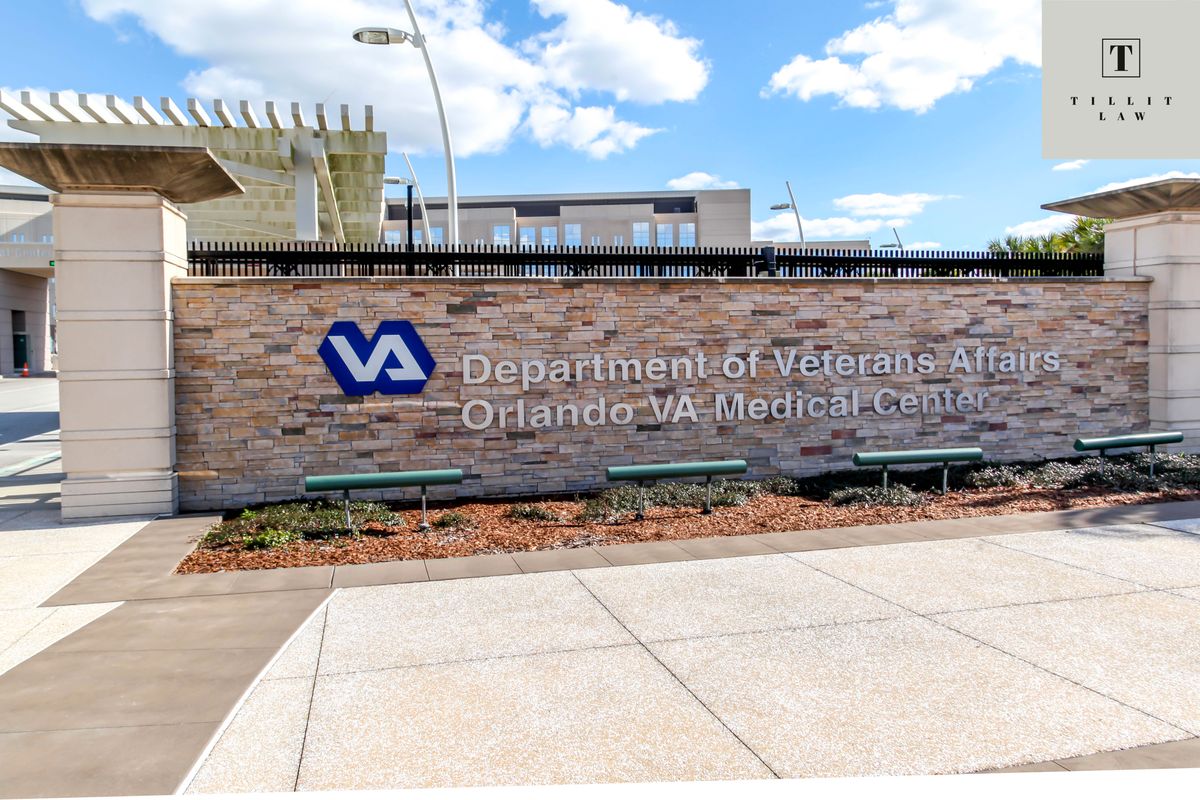
In B-423106, a decision issued on January 16, 2025, the GAO denied a protest challenging the SDVOSB protester’s elimination from competition because the protester had failed to submit a signed limitation on subcontracting certification with its quotation. The Department of Veterans Affairs (VA) issued a request for quotation (RFQ) under the General Services Administration (GSA) Federal Supply Schedule (FSS) program for unarmed security guard services at the VA Medical Center in Orlando, Florida. The procurement was set aside for SDVOSB concerns under the Veterans First Contracting Program. The program’s implementing regulations at VAAR 819.7004 prohibit contracting officers (COs) from making an award without obtaining a certification from the offeror that it will comply with the solicitation’s limitations on subcontracting clause, which is later incorporated in the resultant contract. The RFQ included the limitations on subcontracting clause at VAAR 852.219-75, which in relevant part prohibited the contractor from paying more than 50% of the amount paid to it by the government to firms that were not certified SDVOSBs or VOSBs. The solicitation also required each vendor to submit a completed and signed certification stating that the vendor agreed to comply with the limitation on subcontracting terms. During the preliminary compliance review, the CO determined that the protester’s quotation was missing a signed limitation on subcontracting certification and excluded it from further consideration. The protester filed a timely post-award protest at the GAO.
The protester made two arguments relevant to the limitation on subcontracting certification requirement. Firstly, it argued that the solicitation did not explicitly require the submission of a signed certification. Secondly, and in the alternative, the protester argued that since it had submitted a limitation on subcontracting certification with its quotation but had inadvertently left it unsigned, its error was merely an administrative oversight that should have been remedied by a request for clarification. The GAO rejected both arguments, noting first that the procurement was set aside for SDVOSB concerns under the Veterans First Contracting Program. The RFQ included VAAR 852.219-75, which stated the pertinent limitations on subcontracting. The solicitation also included an unambiguous requirement for a limitation on subcontracting certification. Thus, the protester’s first argument was rejected as being wholly without merit based on GAO’s review of the solicitation’s plain language. The GAO also found the protester’s alternative argument unpersuasive, noting that when included in a solicitation, the limitation on subcontracting certification requirement is a material term of a solicitation because it imposes significant legal obligations on the contractor. Accordingly, an offeror’s failure to submit a signed limitation on subcontracting certification with its quotation when the RFQ specifically requires it is not considered an administrative error or one that can be resolved through clarifications. Rather, such a material omission could only be cured through discussions, not through clarifications, and in any event, the agency was under no obligation to seek clarifications or to conduct discussions with the protester. Consequently, the GAO denied the protest.
When required by a solicitation, the limitation on contracting certification is a material term that imposes substantial legal obligations on the contractor. An offeror’s failure to include a completed and signed limitation on subcontracting certification in such cases is considered a matter of acceptability or responsiveness because it can cause the procuring agency to conclude that the offeror has not agreed to comply with the relevant requirements. Since the limitation on subcontracting certification requirement is a material term, an offeror’s non-compliance cannot be resolved through clarifications. Furthermore, although the decision above involved a signature that was missing altogether, any issues with a signature on a limitation on subcontracting certificate are resolved under the Federal Acquisition Regulation (FAR) definition of a signature. That is, the signature must be a discrete, verifiable symbol of an authorized individual that, when affixed to the certification with the individual’s knowledge and consent, indicates a present intention to authenticate. In this regard, even if the appearance of the signature on the certification is somewhat ambiguous, a handwritten mark may nevertheless qualify as a valid signature if it can be traced back to the individual who possesses the requisite binding authority. Ultimately, it remains the offeror’s responsibility to submit an adequately written proposal that meets all the material terms of the solicitation. The limitation on subcontracting certification, when required by the solicitation, is one such material term that, if not satisfied, renders the offeror’s proposal unacceptable and unable to form the basis of an award.
This Bid Protest Insight is provided as a general summary of the applicable law in the practice area and does not constitute legal advice. Contractors wishing to learn more are encouraged to consult the TILLIT LAW PLLC Client Portal or Contact Us to determine how the law would apply in a specific situation.